As an Amazon Associate, we earn from qualifying purchases. Some links on this site are affiliate links at no extra cost to you. Our recommendations are based on thorough research and editorial judgment.
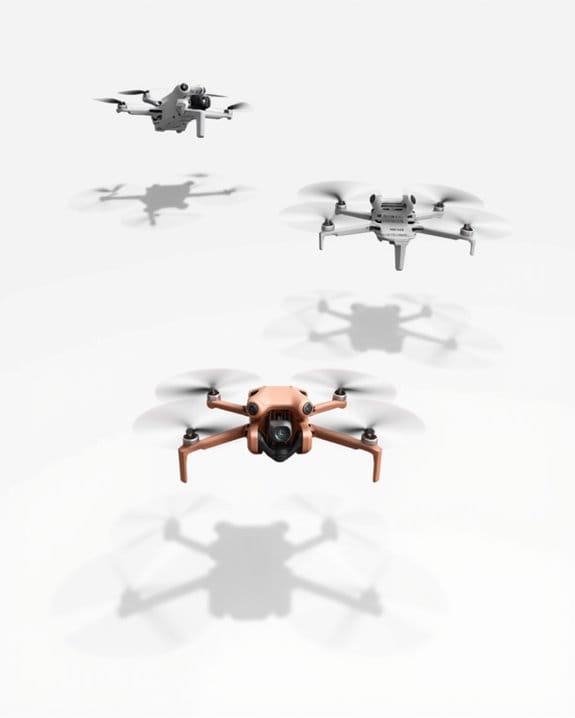
3 Best Micro Drone

The top three micro drones combine performance with portability: The Holy Stone HS210 features one-key stunts and altitude hold while weighing just 50 grams—perfect for beginners. The X1 Self-Flying Camera Drone captures impressive 2.7K HDR video with Follow-Me mode capabilities. For versatility, the Altitude-Hold Drone offers multiple flight modes and durable propeller guards for indoor navigation. Each model includes quick-swap batteries extending flight time to 15+ minutes. Explore these compact flyers to discover which matches your aerial ambitions.
Key Takeaways
- Micro drones typically weigh between 1 ounce and 1.54 pounds with dimensions ranging from 3.15 to 6.38 inches.
- Most quality micro drones offer flight features like altitude hold, headless mode, and one-click takeoff/landing for beginner-friendly operation.
- Average flight time ranges from 7-15 minutes per battery, with many models including multiple batteries for extended use.
- Top micro drones include propeller guards, crash-resistant ABS materials, and enclosed structures for durability indoors.
- Camera capabilities vary from basic FPV to high-quality 2.7K HDR video recording with electronic image stabilization.
Holy Stone Mini Drone for Kids (HS210)
Sale

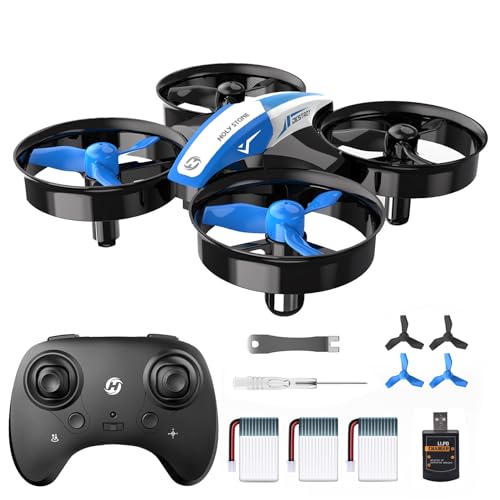
Holy Stone Mini Drone for Kids and Beginners RC Nano Quadcopter Indoor Small Helicopter Plane with...
- More Fun Than Others -- The drone can perform Toss to Launch, Circle Fly, 3D Flips and Auto Rotation; all kids love it! The speed can be changed to fit pilots’ flight...
- User-friendly -- The Altitude Hold function enables itself to hover at fixed height stably; under Headless Mode, directions are always relative to where pilots face...
- 3 Batteries Extend Flight Time -- Flight time is up to 21 Minutes. Never be disappointed by a dead battery or waiting for charging! And the low battery power alarm spares...
You may be interested
The Holy Stone HS210 proves ideal for drone novices who value resilience over complexity. This 50-gram micro flyer packs impressive features into its palm-sized 3.15″ × 3.15″ frame, including one-key stunts, altitude hold, and headless mode for orientation-free piloting.
You’ll appreciate the thoughtful design with:
- Three batteries delivering 21 minutes total flight time
- Durable propeller guards for inevitable crashes
- 160-foot control range for ample exploration
While you might notice some drifting and wind sensitivity (it’s no weather warrior), the HS210’s beginner-friendly controls and 4.2-star rating from over 15,000 users confirm its status as a starter drone that won’t immediately become ceiling décor.
Best For: Beginners ages 14+ seeking an affordable, crash-resistant indoor drone with simple controls and fun features to learn the basics of flying.
Pros:
- Includes three batteries for extended 21-minute total flight time
- Durable design with propeller guards that withstand crashes
- User-friendly features like Headless Mode and Altitude Hold make learning easier
Cons:
- Tends to drift during flight requiring frequent corrections
- Limited outdoor performance due to wind sensitivity
- Short 7-minute battery life per charge requires frequent swapping
Recommended Products
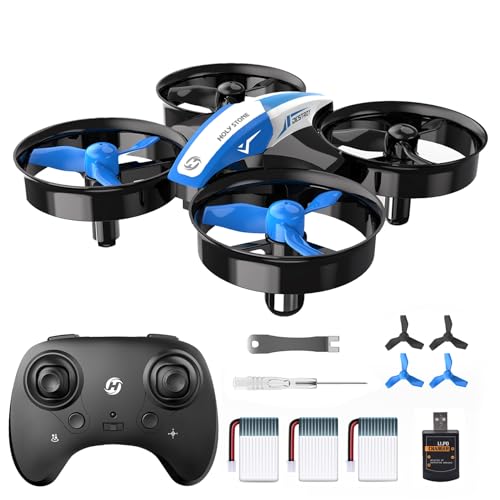
More Fun Than Others -- The drone can perform Toss to Launch, Circle Fly, 3D Flips and Auto Rotation; all kids love it! The speed can be changed to fit pilots’ flight proficiency.

【Easy to Fly: Master the Sky Instantly】 No experience? No problem! Equipped with One-Key Takeoff/Landing and Altitude Hold, this beginner friendly drone stays rock-solid in the air. It’s so easy to fly that even kids 8-12 and adults who have never flown can master the controls in seconds. Perfect for stable indoor outdoor play, ensuring a stress-free start for every new pilot.

【2K Ultra HD Camera】Loiley drone features a high-quality 2K HD camera with a 90° remote adjustable angle, allowing you to capture breathtaking photos and ultra-clear videos from the sky. Whether it's a scenic landscape or a special family moment, this drone helps you preserve every beautiful memory with precision. Simply connect your smartphone to the drone’s camera to enjoy a real-time panoramic view, and easily share your adventures directly to social media with just a tap
X1 Self-Flying Camera Drone with HDR Video and Follow-Me Mode
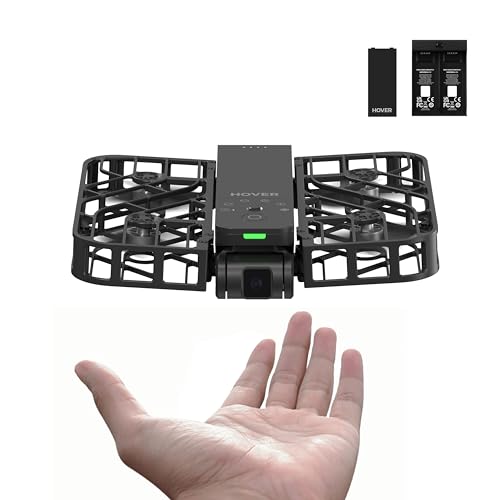
Hands-free flying meets social media-ready footage in HOVERAir’s X1 drone, making it ideal for content creators who don’t want to fuss with complex controls. This 1.54-pound palm-launching drone captures 2.7K HDR video in MP4 format, perfect for vertical social media content.
Key Features:
- Intelligent flight paths
- Follow-Me mode tracking
- Foldable, portable design (5 × 5.71 × 1.18 inches)
- Bluetooth connectivity
- Default hover mode
While users praise its easy operation and stability, some report battery failures and tracking inaccuracies. It’s received 3.9/5 stars across 39 ratings—not perfect, but certainly worth considering if you’re prioritizing simplicity over the advanced capabilities of pricier DJI options.
Best For: Content creators seeking a user-friendly, hands-free drone that captures social media-ready footage without requiring complex piloting skills.
Pros:
- Simple operation with palm launch and intelligent flight paths makes it accessible to drone beginners
- Compact, foldable design (5 × 5.71 × 1.18 inches) enhances portability for travel and outdoor adventures
- 2.7K HDR video capture optimized for vertical social media content creates professional-looking results
Cons:
- Battery reliability issues reported by multiple users leading to unexpected failures during flight
- Follow-Me mode tracking can be inaccurate, potentially compromising autonomous recording capabilities
- Limited advanced features compared to similarly-priced DJI drones
Recommended Products

Intelligent Follow-Me Camera: Harnessing advanced tracking algorithms and a following speed of up to 15 mph, the HOVERAir follow-me self-flying drone becomes your intuitive cameraman, seamlessly tracking your every move. Suitable for cycling, skateboarding, and various sports, it effortlessly captures breathtaking moments, ensuring you're always at the center of the action

* Due to platform compatibility issue, the DJI Fly app has been removed from Google Play. DJI Neo must be activated in the DJI Fly App, to ensure a better product usage experience, please go to the DJI official website to download the App before use.
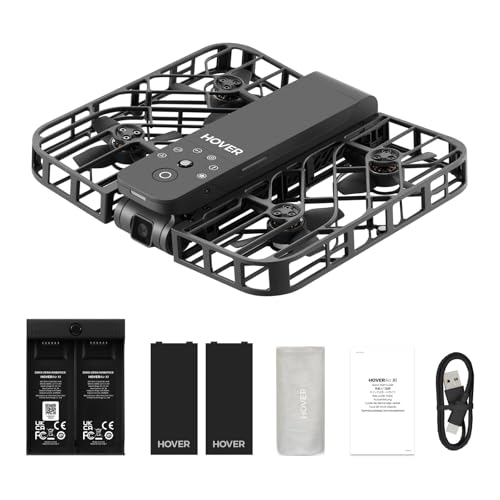
Intelligent Follow-Me Camera: Harnessing advanced tracking algorithms and a following speed of up to 15 mph, the HOVERAir follow-me self-flying drone becomes your intuitive cameraman, seamlessly tracking your every move. Suitable for cycling, skateboarding, and various sports, it effortlessly captures breathtaking moments, ensuring you're always at the center of the action
Drone for Kids with Altitude-Hold and Multiple Flight Modes

Pinotu Drone for Kids, Drone with Altitude-Hold, 3D Flip, Circle Fly, Self-Rotation, Headless Mode...
- More Fun, Feature-rich. The JY09 drone drone for kids, is rich in functions and can realize exciting 3D flip functions, height maintenance functions, surround functions...
- Easy to Control, more Suitable for Beginners. The JY09 kids drone is easy to use. You can take off and land with one click, or you can gently throw the drone into the air...
- Kids friendly, Indoor Drone. This drone for kids, designed for kids is more kid-friendly and uses a fully meshed drone propeller that will not threaten kids, pets or...
Young pilots and beginner flyers will find their perfect match in the JY09 micro drone, which combines simplicity with an impressive array of flight capabilities.
Weighing just 1.09 ounces and measuring 6.38 x 3.98 x 3.5 inches, this lightweight marvel offers multiple flight modes including altitude-hold, 3D flips, and headless mode. You’ll appreciate the one-click takeoff/landing and palm throw options that make first flights less intimidating.
Safety features include fully meshed propellers and crash-resistant ABS material—perfect for indoor adventures. With two rechargeable batteries providing up to 14 minutes of combined flight time, your aerial escapades won’t be cut short.
Best For: Kids ages 14+ who are beginners to drone flying and want an indoor-friendly model with safety features and multiple flight modes.
Pros:
- Fully meshed propeller guards and crash-resistant ABS material provide excellent protection for children, pets, and furniture
- Multiple flight modes (altitude-hold, headless mode, 3D flips) offer exciting variety for beginners
- Comes with two rechargeable batteries that provide up to 14 minutes of combined flight time
Cons:
- Each battery only lasts about 7 minutes per flight session
- Some users report stability issues after multiple flights
- One-hour battery recharge time may interrupt extended play sessions
Recommended Products
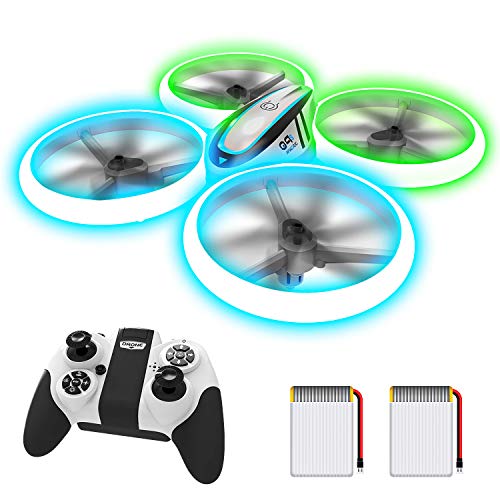
【LIGHT UP THE SKY】Bright LEDs on the Q9s drone emit vibrant neon GREEN & BLUE light throughout its entire frame, providing you with a powerful illuminating effect and a vivid flight experience.It also has three different display modes for lighting. We believe that it will surprise you all!

【720P HD FPV Camera】 Equipped with a 1080P HD camera and FOV 80° wide angle lens, Drone can capture extraordinary moments. In addition, with FPV transmission, you can see fabulous scenery simultaneously in live videos on the app.

【Drone with 1080P Camera - Capture Every Wonderful Moment】This drone with camera features a 1080P HD and 90° adjustable camera that captures clear photos. This FPV drone is perfect for recording family gatherings, travel scenery, sports. The camera drone supports real-time video transmission and gesture control. Make a "V" gesture for photos and use a palm gesture for videos. Photos and videos can easily be shared on social media. Ideal for those who are seeking a great drone to capture moments.
Factors to Consider When Choosing a Micro Drone
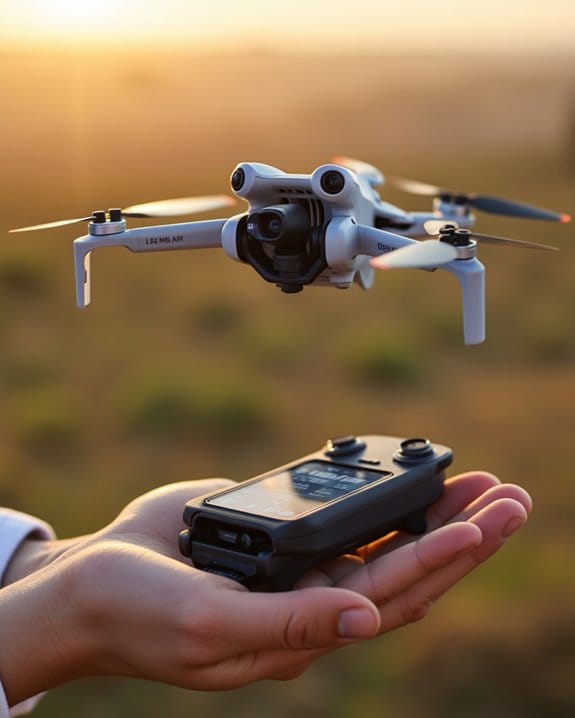
When selecting your micro drone, you’ll need to evaluate several key factors that directly impact your flying experience. Your perfect micro drone should balance size and weight with flight time, while offering control features that match your skill level. Protection features, durability, and indoor/outdoor capability will determine where you can fly and how well your drone will withstand inevitable bumps and crashes.
Recommended Products


【Compatibility】The propeller guard is designed for DJI Mini 4K/Mini 2 SE/Mini 2/Mini SE drone replacement accessory. (Not for Mavic Mini)

【Compatibility】Compatible with DJI FPV drone.
Size and Weight
Portability sits at the heart of the micro drone experience. When selecting your perfect flying companion, understanding the physical specifications becomes essential for matching capabilities to your needs.
Typical micro drones weigh between 1 ounce and 1.54 pounds, with dimensions ranging from pocket-sized 3.15 × 3.15 × 1.18 inches to slightly larger 6.38 × 3.98 × 3.5 inches models. These compact measurements make them ideal for:
- Indoor navigation through tight spaces
- Easy transport in backpacks or cases
- Quick deployment in various environments
The lightest options (around 50 grams) offer superior hovering stability and better wind resistance—a critical advantage for outdoor flights. Remember that weight directly impacts flight time: lighter drones generally stay airborne longer while conserving energy. Your intended flying environment should ultimately guide your size selection.
Flight Time
Beyond physical dimensions, flight time stands as the next performance metric that shapes your micro drone experience. You’ll typically get 7-15 minutes of flight per battery charge, depending on your drone’s design and power efficiency.
Want to extend your aerial adventures? Consider these practical approaches:
- Keep 2-3 interchangeable batteries on hand to reach up to 21 minutes of total flight time
- Look for models advertising 10-15 minutes of continuous operation
- Pay attention to power management features that maximize battery efficiency
- Choose drones with quick-swap battery systems to minimize downtime
- Watch for low battery indicators that give you ample warning before landing becomes necessary
Remember that manufacturer claims often represent ideal conditions, so expect slightly shorter durations during complex flight maneuvers or when using additional features like cameras.
Control Features
The control interface of your micro drone directly impacts everything from flight stability to learning curve. Modern micro drones offer several user-friendly features worth considering:
- Altitude hold: Maintains stable height automatically, letting you focus on directional control rather than constant altitude adjustments
- Headless mode: Controls respond relative to your position instead of the drone’s orientation—perfect for beginners who struggle with directional awareness
- Speed settings: Multiple levels let you start slow and gradually increase as your skills improve
- App-based controls: Virtual joysticks and real-time monitoring through smartphone interfaces provide intuitive operation
- Automated flight functions: One-touch takeoff/landing and pre-programmed flight paths simplify operation
These smart control features transform micro drones from potentially frustrating gadgets into accessible devices that even first-time flyers can enjoy with minimal practice.
Protection and Durability
When selecting a micro drone, durability features directly impact how long your investment will last. Look for models with propeller guards or protective cages—these critical components shield against collisions and prevent injuries during operation.
The material composition matters greatly. Drones constructed from ABS or durable plastics offer superior impact resistance, allowing them to survive those inevitable crashes as you’re learning to fly. The lightweight nature of micro drones (typically under two pounds) works in their favor, reducing potential damage from falls.
Pay attention to:
- Enclosed structures that buffer against physical stress
- Reinforced frames that extend device longevity
- Impact-absorbing components that maintain functionality after minor accidents
These protection mechanisms don’t just safeguard your drone—they guarantee you’ll spend more time flying and less time repairing or replacing damaged parts.
Indoor/Outdoor Capability
Versatility between indoor and outdoor environments represents a key factor when selecting your micro drone. Models under 250 grams deliver ideal stability for indoor flights, where confined spaces demand precision control. When flying inside, propeller guards become essential safety features, preventing damage from inevitable wall collisions.
Look for drones with altitude hold functionality—this feature guarantees stable hovering indoors where air is calm. For outdoor adventures, verify wind resistance ratings of 10-15 mph, though be aware that even “outdoor-capable” micro drones struggle in moderate breezes.
Size matters greatly: compact drones under 6 inches in diameter navigate indoor obstacles with ease, while larger models might feel clumsy in tight spaces. The best micro drones balance these considerations, offering the flexibility to fly smoothly whether you’re practicing in your living room or exploring your backyard.
Frequently Asked Questions
How Do Micro Drones Perform in Windy Conditions?
Windy weather weakens micro drone performance greatly. You’ll notice these tiny flyers struggle when breezes exceed 5-8 mph, as their lightweight frames (typically under 250g) can’t fight strong air currents effectively. Most budget models become nearly unusable in moderate winds, while premium options with stronger motors and stabilization technology perform marginally better. For best results, fly your micro drone during calm mornings or evenings when wind speeds are minimal.
What Is the Average Battery Charging Time for Micro Drones?
Most micro drones take between 30-60 minutes to fully charge, though this varies by model. You’ll find:
- Entry-level models: 40-45 minutes
- Mid-range options: 30-40 minutes
- Premium drones: 25-35 minutes
Fast-charging models exist but often cost more. Many manufacturers include USB charging cables, letting you power up from laptops or power banks while on the go. Remember to factor in charging time when planning your flight sessions!
Are Micro Drones Legal to Fly in National Parks?
No, you can’t fly micro drones in most U.S. national parks. The National Park Service prohibits launching, landing, or operating unmanned aircraft within park boundaries unless specifically authorized. This restriction exists to protect wildlife, preserve natural soundscapes, and safeguard visitor safety. You’ll need to check with each specific park as some may have designated areas where limited drone use is permitted. Violating these regulations can result in significant fines.
Can Micro Drones Be Flown Indoors Safely?
Yes, you can fly micro drones indoors safely with proper precautions. These lightweight flyers are designed for confined spaces and typically feature:
- Propeller guards to protect furniture and walls
- Altitude hold for stable hovering
- Low-speed modes for beginners
Keep windows closed, remove fragile items, and maintain line-of-sight control. Start in larger rooms until you’ve mastered the controls. Most indoor-friendly models weigh under 250g and have shorter flight times, making them ideal for home use.
What Maintenance Is Required for Micro Drone Propellers?
Like tiny ballerinas spinning in perfect harmony, your micro drone’s propellers need regular attention. You’ll want to:
- Inspect before each flight for cracks or bends
- Clean with a soft, dry cloth to remove dust and debris
- Remove hair or threads wrapped around motors
- Replace propellers showing any damage
Most models include spare props, as they’re the most frequently damaged component. For extended propeller life, store your drone in a protective case when not in use.