As an Amazon Associate, we earn from qualifying purchases. Some links on this site are affiliate links at no extra cost to you. Our recommendations are based on thorough research and editorial judgment.
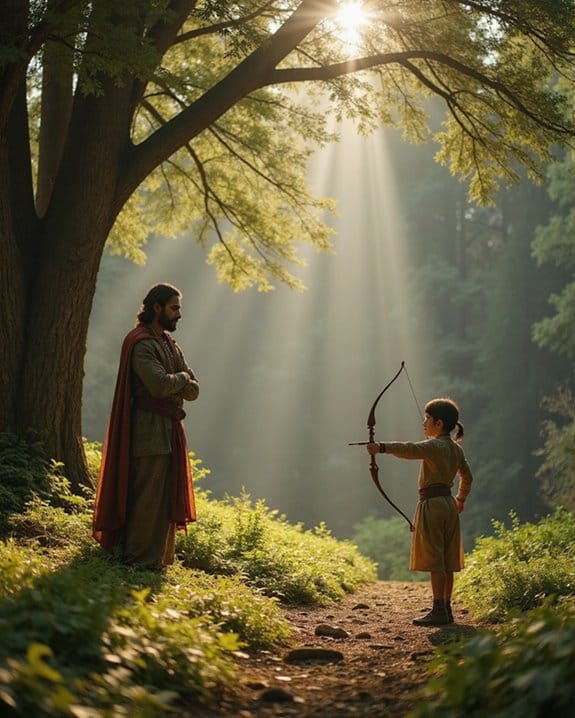
Why Did Drona Refuse to Teach Archery to Ekalavya?

Drona refused to teach you, Ekalavya, archery because your standing as a prince from the rival Nishad kingdom—and ally to Hastinapur’s enemies—posed too great a political risk. The academy, funded by Hastinapur, only trained royal, loyal Kshatriya students to protect state interests. Social barriers and security concerns shaped Drona’s decision more than personal bias. So, while you mastered archery on your own, Drona’s refusal was rooted in politics, not merit. Think there’s more behind the legend?
Key Takeaways
- Drona refused Ekalavya because he belonged to the Nishad tribe, politically allied with Hastinapur’s enemies.
- The academy’s admission was restricted to Kshatriyas and royals loyal to the Hastinapur throne.
- Drona feared empowering a rival faction by teaching advanced archery to an outsider from a potentially hostile group.
- Social and caste barriers excluded non-Kshatriyas like Ekalavya, regardless of his royal lineage.
- Drona’s decision aimed to protect the kingdom’s security and uphold elite power structures.
Ekalavya’s Royal Lineage and Background
You may be interested

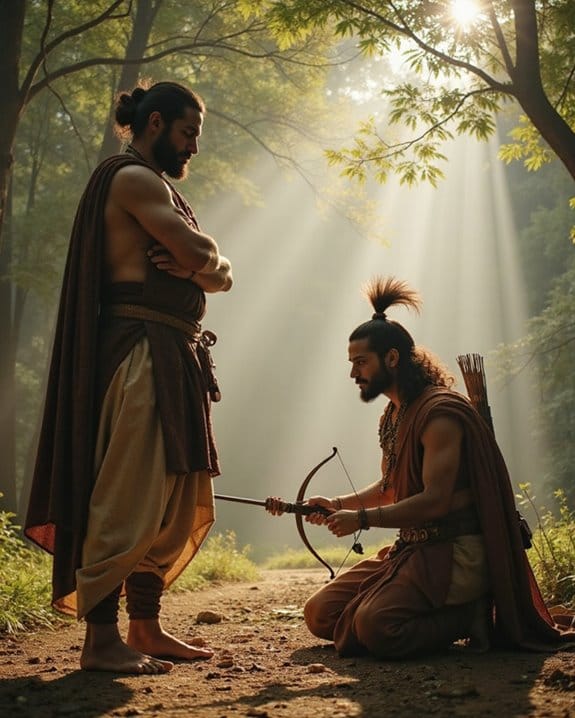
When you explore into Ekalavya’s story, it’s easy to overlook just how regal his background actually is. You might assume he lacked the right family background, but that’s not the case. Ekalavya was the son of Hiranyadhanu, the king of the Nishads, giving him a solid royal lineage. Ancient texts, like those by Ved Vyas, stress that Ekalavya wasn’t a poor, unremarkable figure but a prince from a recognized tribal dynasty.
Key Specifications:
- Royal Status: Son of King Hiranyadhanu
- Mature Age: Approached Drona as an adult
- Nishad Dynasty: Part of a significant regional power
The Political Landscape of the Mahabharata Era
A closer look at the Mahabharata era reveals a landscape where politics and warfare were tightly interwoven, shaping every major decision—including who got to learn archery. You’ll notice that Dronacharya refused to teach archery to certain individuals not just out of personal bias, but because the political climate demanded it. Let’s break down the specs of this “policy”:
- Alliances: Jarasandha of Magadha, a major threat to Hastinapur, frequently raided Mathura with support from tribes like the Nishads.
- Loyalty: The Nishads’ alliance with Jarasandha put them on Hastinapur’s enemy list.
- Funding: Drona’s academy was financed by Hastinapur’s throne, making his teaching choices strategic.
In this climate, teaching archery to enemy-allied groups was like handing your rival the user manual to your own defenses.
Dronacharya’s Allegiance to Hastinapur

Why did Dronacharya, famed for his expertise, draw such a hard line with Ekalavya? The answer lies in Dronacharya’s allegiance to Hastinapur. As the royal instructor, he wasn’t just teaching archery—he was safeguarding the kingdom’s interests. Drona refused to teach Ekalavya for several practical reasons:
Key Specifications:
- Dronacharya’s academy operated under the funding and authority of Hastinapur’s throne.
- Ekalavya belonged to the Nishads, a group allied with Jarasandha, a major adversary of Hastinapur.
- Training Ekalavya could risk empowering enemy factions, threatening the kingdom’s security.
Comparison:
While Dronacharya’s skills were legendary, his loyalty dictated his student selection. So, Drona refused to teach anyone whose allegiance could compromise Hastinapur’s stability—Ekalavya included. Sometimes, the best defense is not sharing your playbook.
Social Hierarchies and Access to Education
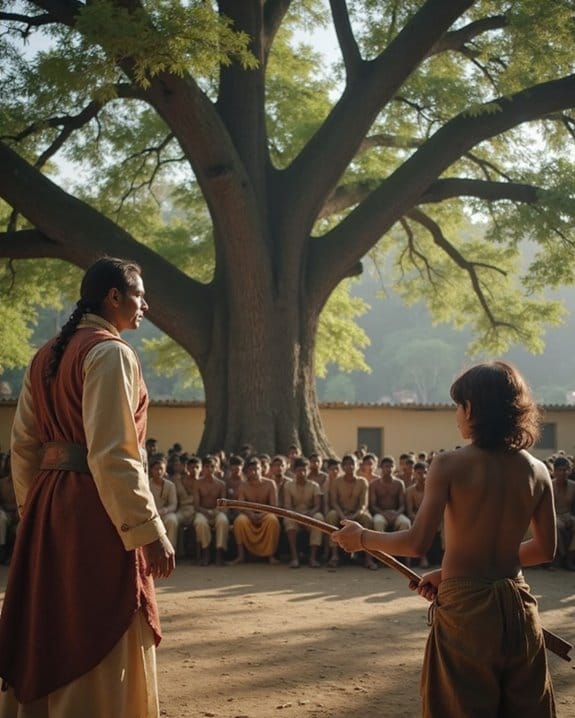
Ever wondered how ancient rules shaped who got to wield a bow? In Drona’s time, social hierarchies played the ultimate gatekeeper. If you were an aspirational student like Ekalavya, born outside the elite Kshatriya or royal families, your dreams of mastering archery were blocked by rigid caste lines.
Key Specifications of Ancient Education Access:
- Eligibility: Reserved for Kshatriyas, royals, and Brahmins
- Exclusion: Tribes like the Nishads, even if their leaders were kings
- Political Influence: Drona’s academy was funded by Hastinapur, aligning educational access with political loyalty
Comparison:
- Kshatriya students: Open access, formal training
- Non-Kshatriya aspirants: Barred, even if highly motivated
Recommendation: If you’re analyzing ancient Indian society, observe how Drona’s choices reflect broader educational gatekeeping, locking out talent regardless of potential.
Recommended Products

【6 Pack Snap On Drone Lens Accessories】 The kit for your drone gear includes 4 x Neutral Density filter (ND4/ND8/ND16/ND32), 1 x circular polarizing filter, and 1 x UV filter, compatible with DJI Mini 4K Drone with 4K UHD Camera for Adults/ Mini 2 / Mavic Mini / Mini SE / Mini 2SE and Fly More Combos, meeting various photography needs, from glare reduction to long exposure effects, as well as providing lens protection. Simple snap on design makes easy and swift filter attachment and dismounting

Mavic 4 Pro Dual Focal Length Split Filter Kit: Engineered to overcome the challenges of different focal lengths and apertures, delivering precise exposure control for flawless footage.

【Lightweight Plastic Frame】 Built with a plastic frame, each filter is easy to install and remove from the camera lens. At just 0.024oz/0.7g, it will not affect drone gimbal calibration and balance
The Role of Jarasandha and the Nishad Kingdom
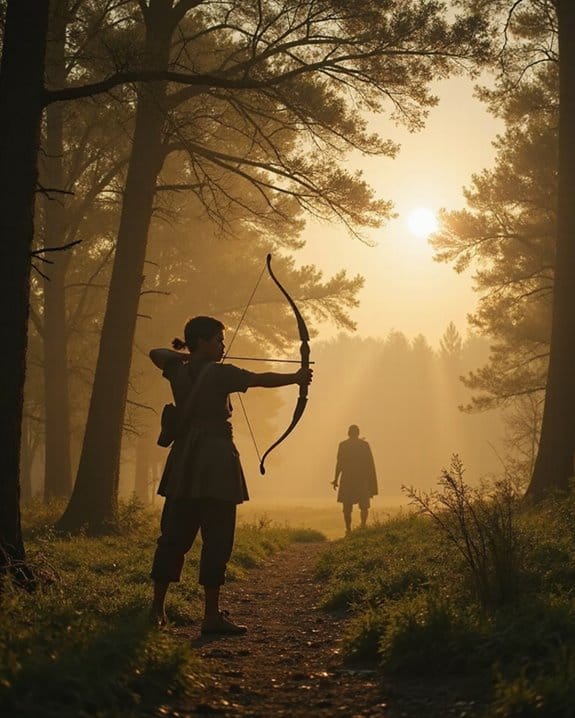
In the shifting landscape of ancient Indian power politics, you can’t overlook the impact of alliances—especially those forged between the Nishad Kingdom and Jarasandha. If you’re examining Guru Dronacharya’s decision, the connection is vital. Ekalavya, as a student from the Nishad Kingdom, wasn’t just any applicant—he was the son of Hiranyadhanu, whose people fought alongside Jarasandha, a sworn enemy of Hastinapur.
Here’s the technical breakdown:
- Political Alliances: Nishads supported Jarasandha’s raids on Mathura, aligning them against Dronacharya’s patrons.
- Security Risks: Training a student from this faction risked arming future adversaries.
- Academy Funding: Drona relied on Hastinapur’s support; teaching rivals could jeopardize his position.
Bottom line: Drona’s refusal was less personal, more strategic—a defensive move shaped by shifting loyalties and battlefield realities.
Drona’s Motivations and Fears
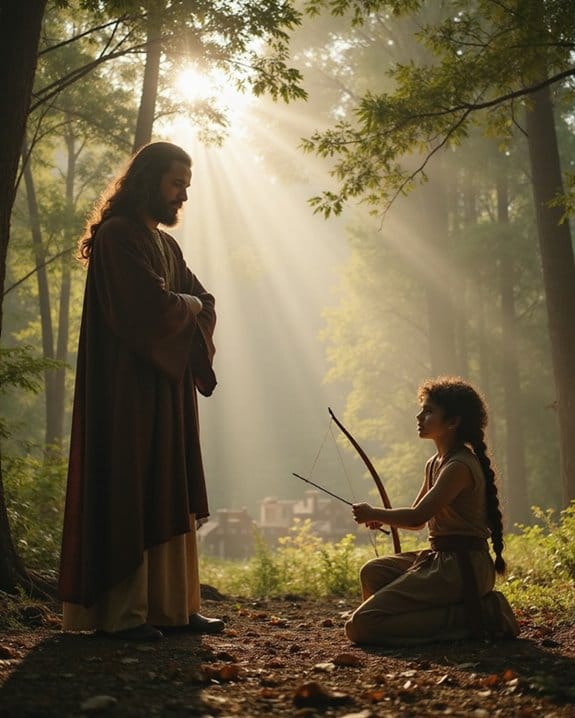
How did Drona weigh his options when it came to Ekalavya? Let’s break it down:
Product Overview: Drona’s Dilemma****
- Drona runs a state-funded academy. Teaching Ekalavya, a motivated student who learns quickly, risks aiding Hastinapur’s enemies since Ekalavya’s tribe allies with Jarasandha.
- Drona must uphold social order: archery is for Kshatriyas, not for a king’s son from a rival group.
Detailed Analysis: Drona’s Strategic Fears****
- He fears Ekalavya’s independent mastery could threaten his promise to Arjuna and disrupt the teacher-student hierarchy.
- Demands Ekalavyas thumb as guru dakshina—an effective way to curb competition and maintain his legacy.
Recommendation:
– In Drona’s view, protecting royal interests and social norms outweighs nurturing every talented learner, even one as exceptional as Ekalavya. Sometimes, safeguarding the “brand” means making tough calls.
Ekalavya’s Self-Taught Mastery in Archery
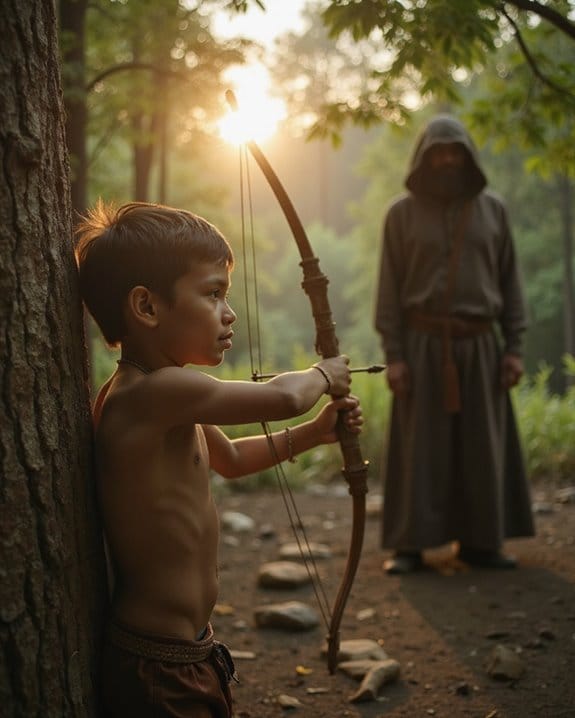
What does it take to become an elite archer without a formal teacher? If you’re a student who learns without direct instruction, Ekalavya’s journey is a masterclass. Instead of formal lessons, he built a clay statue of Dronacharya, treating it as his mentor. This innovative approach allowed him to teach himself advanced archery techniques in the solitude of the jungle.
Key Specifications:
- Self-guided learning model: observation-based, practice-driven
- Precision test: seven arrows in a dog’s mouth, zero harm
- Training schedule: nightly, independent, disciplined
Analysis: Ekalavya’s self-taught mastery rivals that of any formally trained student. His relentless determination and keen observation transformed him into Arjuna’s direct competitor. If you ever wondered if true mastery demands a teacher, Ekalavya’s story might make you quiver with doubt. Much like the intelligent tracking and stabilization systems in modern AI drones that enable autonomous operation, Ekalavya’s self-discipline and focus acted as his own form of autonomous learning.
Recommended Products

Intelligent Follow-Me Camera: Harnessing advanced tracking algorithms and a following speed of up to 15 mph, the HOVERAir follow-me self-flying drone becomes your intuitive cameraman, seamlessly tracking your every move. Suitable for cycling, skateboarding, and various sports, it effortlessly captures breathtaking moments, ensuring you're always at the center of the action

* Due to platform compatibility issue, the DJI Fly app has been removed from Google Play. DJI Neo must be activated in the DJI Fly App, to ensure a better product usage experience, please go to the DJI official website to download the App before use.
The Infamous Guru Dakshina Demand
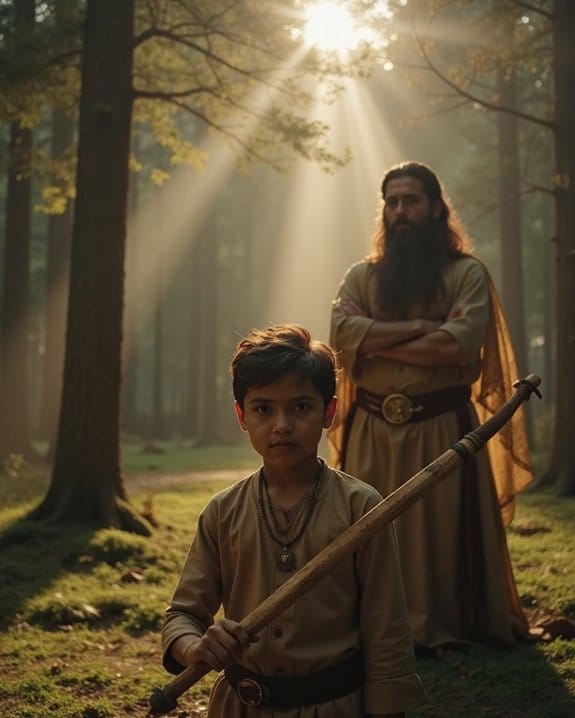
Ever wonder why a teacher would ask for a student’s thumb as payment? In the case of Dronacharya and Ekalavya, the guru dakshina—traditionally a token of gratitude—became a tool to maintain control. Here’s a breakdown:
Key Facts:
- Drona discovered Ekalavya’s archery skills, achieved by practicing before Drona’s statue.
- To protect Arjuna’s status, Drona demanded Ekalavya’s right thumb as dakshina.
- Ekalavya complied, instantly severing his thumb, showing ultimate devotion.
- Thumb loss crippled Ekalavya’s archery, ending his competitive prospects.
Analysis:
- The demand wasn’t about skill; it was about hierarchy and preserving privilege.
- This event highlights how dakshina can be used to enforce social barriers.
- For students, it’s a cautionary tale: sometimes the price of learning isn’t just effort—it’s sacrifice.
Interpretations and Misconceptions in Modern Narratives
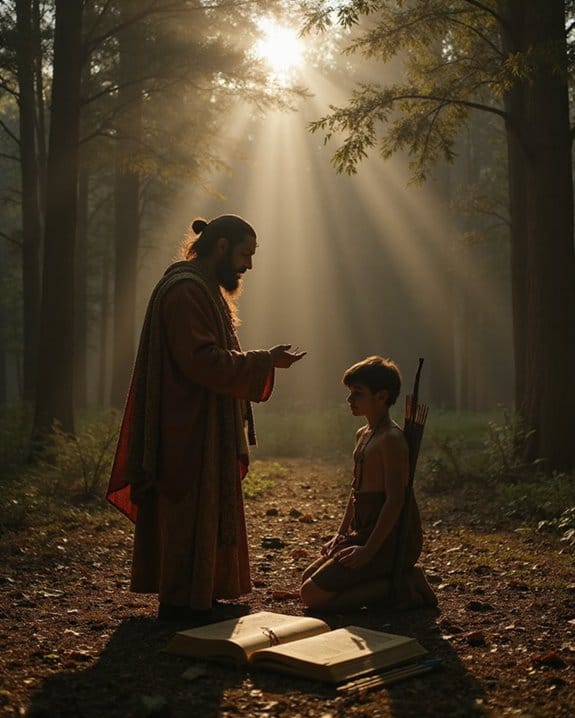
Stepping back from the drama of the guru dakshina, let’s look at how the story of Ekalavya and Dronacharya gets repackaged in modern narratives. You’ll often see Ekalavya depicted as a poor, lower-caste child—an image far removed from Ved Vyas’s account of him as a Nishad prince. Many retellings highlight the Thumb as Guru Dakshina, presenting it as a symbol of ultimate student sacrifice that supposedly symbolizes every teacher’s dream. But this glosses over Drona’s motives: protecting power structures and political alliances.
Compare:
- Traditional sources: Ekalavya as royal, adult.
- Modern materials: Ekalavya as victim, Drona as ideal coach.
Educational platforms frequently skip the uncomfortable truth—Drona’s demand was less noble act, more control tactic. Don’t let feel-good versions cloud historical nuance.
Recommended Products

This FPV ND UV Filter Set is compatible with O4 Pro Air Unit, ensuring its adaptability and suitable for aerial video shooting.

【Lightweight Design】 The filter frame is made of aviation aluminum alloy, and the edge of the frame adopts CNC non-slip design, which is easy to install and disassemble. It weighs only 1.2g without affecting drone calibration and balance.

【3 Pack Drone Filter Set】 Compatible with DJI Mini 4K, Mini 2 SE, Mini SE, Mini 2, Mavic Mini and Fly More Combos, this circular polarizing neutral density drone filter set elevates your aerial photography and videography to a professional level. Each lens filter quickly snaps onto the camera and locks into place with a hook for secure attachment during flights
Lessons for Contemporary Educational Systems
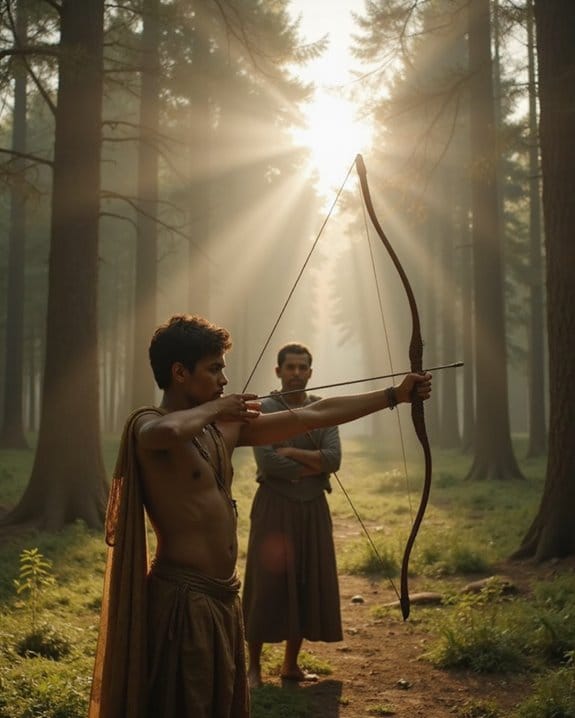
Curiously, the story of Drona and Ekalavya isn’t just ancient lore—it’s a practical case study for today’s education reformers. As you evaluate modern systems, consider these lessons:
Key Takeaways for Contemporary Education
- Drona’s refusal, rooted in social class, warns you against perpetuating caste or lineage-based exclusions—something critics still observe in elite academic circles.
- The demand for Ekalavya’s thumb as Guru illustrates how unchecked authority can stifle talent; today’s reforms must check teacher power and foster meritocracy.
- Remember: Ekalavya’s self-teaching shows that equitable access to resources—not just prestigious Gurus—can unleash hidden potential.
- Ironically, India’s Dronacharya Award shows that idealizing tradition isn’t enough; educators should be evaluated for merit and inclusivity.
- Ekalavya schools remind you to address inequalities in teacher training and student opportunities, not just celebrate symbolic progress.
Frequently Asked Questions
Recommended Products

The edges of the sst tip line up with each blade and paves the way through bone and tissue, creating pathways for the blades to follow, resulting in better penetration
100% Solid Steel construction with a reduced ferrule surface area that delivers unsurpassed accuracy, strength and penetration in a fixed blade broadhead that flies like a dart.

ATTENTION: The original package is the unstrung status for safe transportation, NOT WRONG SIDE. Customer needs to strung it. If you don't know how to strung, please see Instruction Book or contact us.
Why Did Guru Drona Not Teach Archery to Ekalavya?
You’re wondering why Guru Drona didn’t teach archery to Ekalavya. It’s because you weren’t from the Kshatriya class or loyal to Hastinapur, so Drona couldn’t accept you due to political and social restrictions.
Why Did Dronacharya Not Accept Ekalavya as His Disciple?
If you look deeper, you’ll see Dronacharya didn’t accept Ekalavya as his disciple due to political ties, social hierarchy, and loyalty to Hastinapur. It’s not just about skill—it’s about allegiance, status, and the risks involved.
How Did Drona Respond to Buttoo’s Request to Teach Him Archery?
When you ask how Drona responded to Buttoo’s request, you’ll find he didn’t agree to teach him archery. He refused, citing existing traditions and obligations, and didn’t provide any instruction, leaving Buttoo to seek knowledge independently.
Why Did Drona Refuse To?
You’re wondering why Drona refused to teach someone archery. It’s because he had strict rules about who could learn, prioritizing loyalty and political alliances, and didn’t want to risk empowering those outside his chosen circle or threaten Hastinapur.