As an Amazon Associate, we earn from qualifying purchases. Some links on this site are affiliate links at no extra cost to you. Our recommendations are based on thorough research and editorial judgment.
Why Was the Hummingbird Drone Invented? Exploring Its Purpose

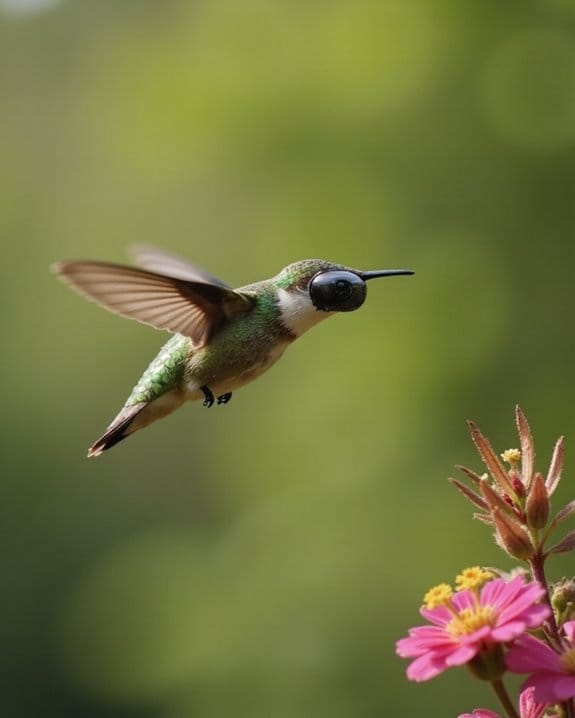
You’ll find the hummingbird drone was invented to combine hummingbird-inspired flight agility with advanced surveillance and rescue capabilities. By reverse-engineering the bird’s unique wing mechanics, engineers created a lightweight drone that can hover, dart in any direction, and maneuver through tight spaces—perfect for tasks like urban surveillance, disaster response, and hazardous environment detection. It’s a technological marvel, quietly gathering intel or searching for survivors where humans can’t safely go. Stick around to discover how its design is revolutionizing these fields.
Key Takeaways
- The hummingbird drone was invented to enable discreet, agile surveillance in complex or urban environments.
- Its design aims to mimic hummingbird flight for superior aerial maneuverability and access to confined spaces.
- It serves rescue and hazard detection roles, safely reaching locations too dangerous for humans.
- The drone provides stable hovering and perching for prolonged intelligence gathering and monitoring.
- It advances biomimicry in robotics, inspiring new aerial technologies for military, rescue, and environmental applications.
The Extraordinary Flight Mechanics of Hummingbirds
You may be interested

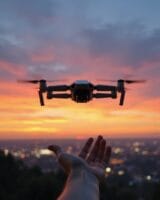
When you watch a hummingbird in flight, you’re witnessing one of nature’s most remarkable engineering feats. Hummingbirds combine rapid wing flapping—up to 80 times per second—with precise muscular control, giving them extreme aerial agility unmatched by most birds. Researchers studying the principles of hummingbird wing motion have found:
- Flight muscles pull the wing up-and-down, back-and-forth, and twist it for nuanced maneuvers.
- Smaller muscles tighten shoulder joints for stability during hovering and pitch, while allowing flexibility for swift directional changes.
- Shortened arm bones and unique wrist flicks enable sideways and backward flight at speeds reaching 50 km/hr.
Recent research using micro-CT, X-rays, and computational modeling has quantified the torque and muscle coordination required for such remarkable flight, inspiring both awe and technological curiosity. This extraordinary flight mechanics has inspired innovations like the X-Fly Bionic Bird drone, which replicates bird-like flapping motion through a patented mechanism.
Reverse-Engineering Nature: From Bird to Drone
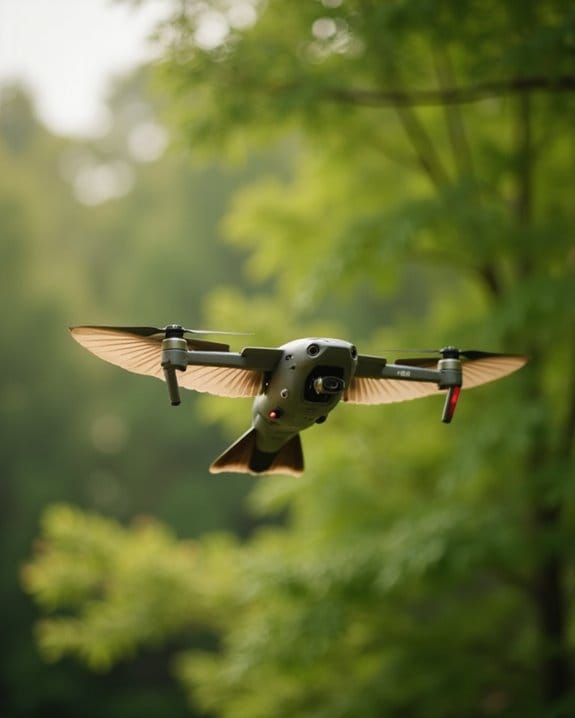
Ever wondered how scientists transform hummingbird magic into mechanical innovation? To reverse-engineer the inner workings of these tiny marvels, researchers used muscle anatomy, micro-CT and X-ray scans to see exactly how hummingbirds produce wing movement. They then paired this data with computational fluid dynamics simulation, capturing the airflow and forces involved.
- By modeling how muscles and skeleton work together, they revealed that hummingbirds’ main muscles move wings up-and-down, back-and-forth, and twisting, while smaller muscles fine-tune shoulder joints.
- An optimization algorithm based on genetic principles honed these models, informing design improvements in flying robots.
Mimicry of hummingbirds means aerial vehicles are designed for agility and precision—perfect for drones needing tight maneuvers. This approach sets the stage for the next leap in biomimetic flight. Modern drones like the HOVERAir X1 demonstrate how intelligent flight paths enable precise and stable automated control inspired by natural flight mechanics.
Recommended Products
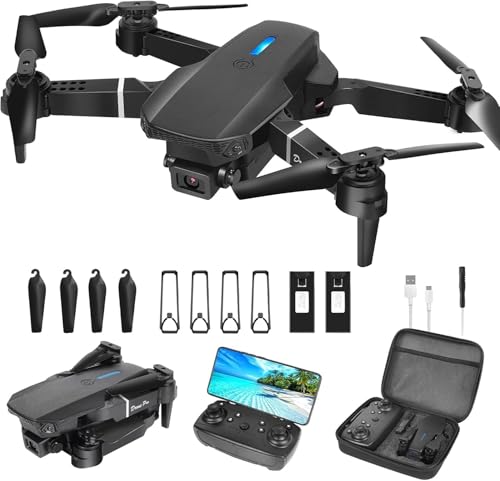
【Ideal Drone Toy for Adults】: The drone is the perfect choice for beginners to embark on their first drone flying adventure. The one-key start function allows users to take off effortlessly.

【2K Ultra HD Camera】Loiley drone features a high-quality 2K HD camera with a 90° remote adjustable angle, allowing you to capture breathtaking photos and ultra-clear videos from the sky. Whether it's a scenic landscape or a special family moment, this drone helps you preserve every beautiful memory with precision. Simply connect your smartphone to the drone’s camera to enjoy a real-time panoramic view, and easily share your adventures directly to social media with just a tap

【Drone with Camera for Adults】 Unlike ordinary entry-level drones, the TT19LCD is equipped with an FPV HD camera and a 90° remotely adjustable lens, allowing you to capture vivid aerial photos and videos with realistic colors and impressive clarity. From breathtaking coastlines to mountain trails and city skylines, every scene comes to life with smooth, detailed footage that outperforms many standard 720P and 1080P drones. In addition, the built-in optical flow camera continuously analyzes the ground below, providing stable hovering and accurate positioning for safer indoor and outdoor flights.
Key Innovations Behind the Hummingbird Drone
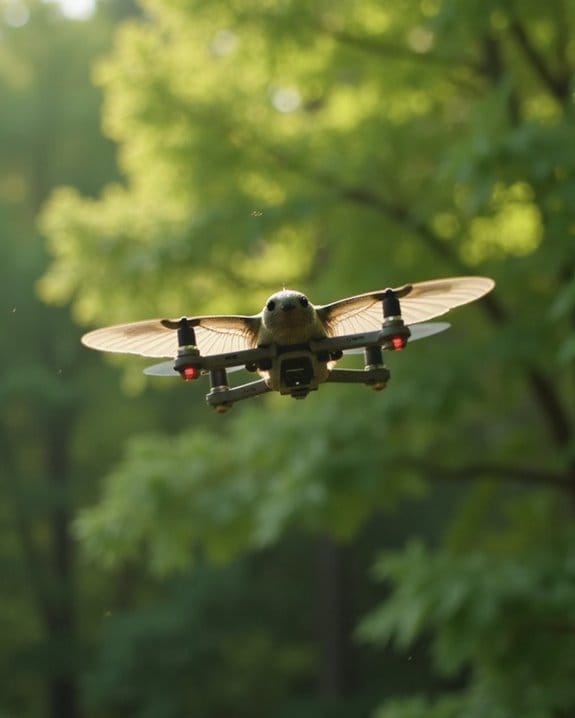
A true marvel of modern engineering, the Hummingbird Drone packs impressive innovation into a palm-sized package. You’ll find its flapping wings do more than flutter—they enable agile aerial maneuvers that mimic hummingbird flight with remarkable precision. This technological development gives the drone aerial agility and hovering capabilities that most drones can only dream of.
Key Features & Innovations:
- Video camera: Miniaturized surveillance unit for live intelligence gathering.
- Flapping wings: Power precise navigation, climbing, and 360° rotation.
- Lightweight design: Less than a AA battery, yet robust in flight.
- Hovering & perching: Can hover in place or perch stealthily on ledges.
- Advanced controls: Enable prolonged, stable flight and adaptability.
For users seeking drones that require access to confined spaces or demanding precise navigation, this hummingbird-inspired technology stands out.
Recommended Products

Realistic Bionic Flight: This RC ornithopter drone mimics the elegant wing-flapping of a real butterfly, offering mesmerizing, lifelike aerial movement that captures the beauty of nature.

𝐄𝐧𝐣𝐨𝐲 𝐌𝐨𝐫𝐞 𝐅𝐮𝐧 --- This drone features one-click takeoff/landing function, ensuring easy control, especially for kids who are not yet skilled. Also, its 3D Flips function adds an extra layer of excitement to the flying experience for kids.

STABLE: Onboard gyroscope provides flight stability
Applications Transforming Surveillance and Rescue
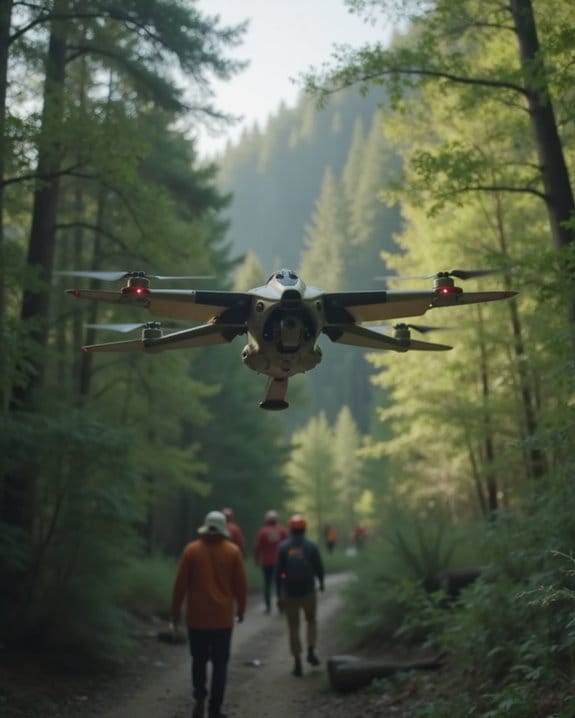
Stealth takes flight with the hummingbird drone, transforming how surveillance and rescue teams operate in the field. The Nano Hummingbird, developed under the Defense Advanced Research Projects Agency, leverages aerial agility and flight to access confined or hazardous spaces—an edge drones and other aerial systems often lack. Mimicry of hummingbirds isn’t just for show; it’s an essential principle for informed mimicry, leading to design improvements and the next generation of agile aerial tools.
Key Applications:
- Surveillance: Discreet intelligence gathering in urban environments.
- Rescue: Locating individuals in collapsed buildings with autonomous flight.
- Hazard Detection: Monitoring chemical leaks without risking human life.
These implications for technological development of aerial platforms mean you’re getting a compact, versatile tool—one that’s always ready to wing it when stakes are high. Modern thermal drones with AI target recognition capabilities further enhance these applications by improving detection and situational awareness in complex environments.
The Future of Biomimicry in Aerial Technology
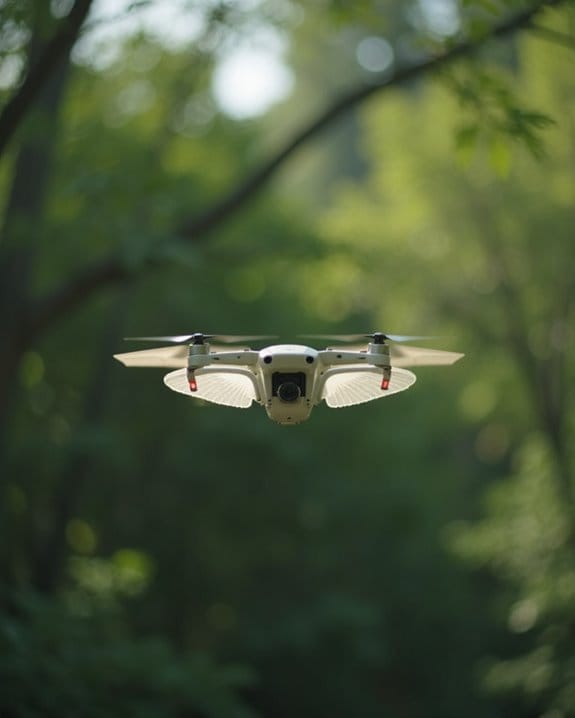
When you look at the future of biomimicry in aerial technology, it’s clear that nature’s blueprints are shaping tomorrow’s drones in ways both subtle and revolutionary. By studying hummingbirds, engineers are unveiling agile flight and informed mimicry that push next-generation aerial technology to new heights. Here’s what’s next:
Key Advances:
- Agile Flight: Hummingbird-inspired drones boast precision, hovering, and sudden direction changes.
- Fluid Dynamics: Research into owl feathers informs quieter, more efficient flight.
- DARPA Innovations: Insect-based drones and micro-sensors target urban combat and disaster relief.
- Machine Learning: AI analyzes hummingbird flight, driving autonomous mapping robots.
Who benefits?
- Surveillance teams get stealthier options.
- Rescue crews use compact, nimble robots.
- Environmental scientists deploy swarms for localized data.
Tomorrow’s drones will mimic nature—no birdseed required.
Frequently Asked Questions
Why Was the Hummingbird Drone Invented?
You’re probably wondering why the hummingbird drone was invented. It’s designed for advanced surveillance and rescue, letting you navigate tough spaces, hover, and record discreetly—perfect for locating people, detecting hazards, and gathering intelligence in risky environments.
What Is the Purpose of the Hummingbird’s Wings?
Picture vibrant wings beating in a blur, letting you hover perfectly still, zip backwards, or dart sideways. The hummingbird’s wings give you unmatched agility, helping you feed on nectar, escape predators, and thrive among dense flowers.
What Was the Purpose of the First Drone?
You might be curious about the first drone’s purpose—it was designed mainly for military surveillance, letting you gather intelligence remotely. Over time, you’d see drones used for search and rescue, disaster response, and even monitoring hazardous environments.
What Is the Story Behind the Hummingbird?
If you’re wondering whether nature really inspires tech breakthroughs, look at the hummingbird drone. You’ll see engineers didn’t just copy a bird—they solved huge challenges, proving that blending biology and innovation creates truly groundbreaking possibilities for you.